


LibreOffice License – what is worth knowing?
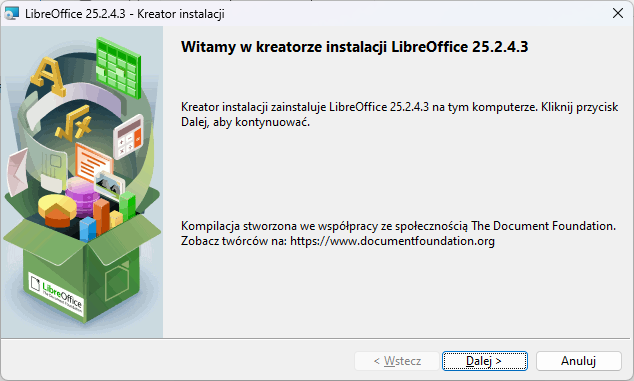
LibreOffice is open-source software. This means it is available under open-source licenses. Thanks to this, users can freely use its features.
Below you will find an explanation of which licenses LibreOffice uses and what this means in practice.
Which licenses cover LibreOffice?
LibreOffice is mainly based on two types of licenses. Both provide users with freedom to use, modify, and distribute the software. Moreover, they promote collaboration and openness.
GNU Lesser General Public License (LGPL)
LGPL is the main license used for most LibreOffice components. It allows users to:
-use the software for any purpose,
-copy and distribute it,
-modify the source code.
Unlike the GNU GPL license, LGPL allows LibreOffice to be linked with proprietary software. Thanks to this, companies can use the suite in commercial environments without violating the license.
Mozilla Public License (MPL)
Some LibreOffice components are covered by the MPL license. It is used, among others, for the Thunderbird application.
This license allows modification, copying, and distribution of the code. However, unlike LGPL, MPL requires that any modified part of the code be made publicly available. In this way, it ensures greater transparency and accountability in software development.
What does an open license mean for the user?
Open-source licenses give users a great deal of flexibility. You can not only use the software, but also:
-examine its source code,
-adapt it to your own needs,
-share the finished solution with others.
Importantly, this does not involve any licensing fees. As a result, LibreOffice is available to individual users as well as companies, schools, and public institutions.
Why does this approach matter?
The open licensing model creates a community of engaged users and developers. Participants can report bugs, translate the interface, propose new features, and develop the code.
As a result, LibreOffice develops dynamically and responds to real user needs. Thanks to this, the suite has gained trust worldwide—not only as a free alternative, but as a solid and continuously developed tool.
LibreOffice licenses offer:
-freedom of use,
-full control over the code,
-encouragement for collaboration.
It is this open approach that makes LibreOffice unique. Thanks to it, you can use an office suite that is free, customizable, and constantly improved by the community.